Commercial and construction dumpsters keep active building sites, tenant-turnover projects, and structural demolitions organized without debris choking active staging zones. For single-room commercial refits along Vine…
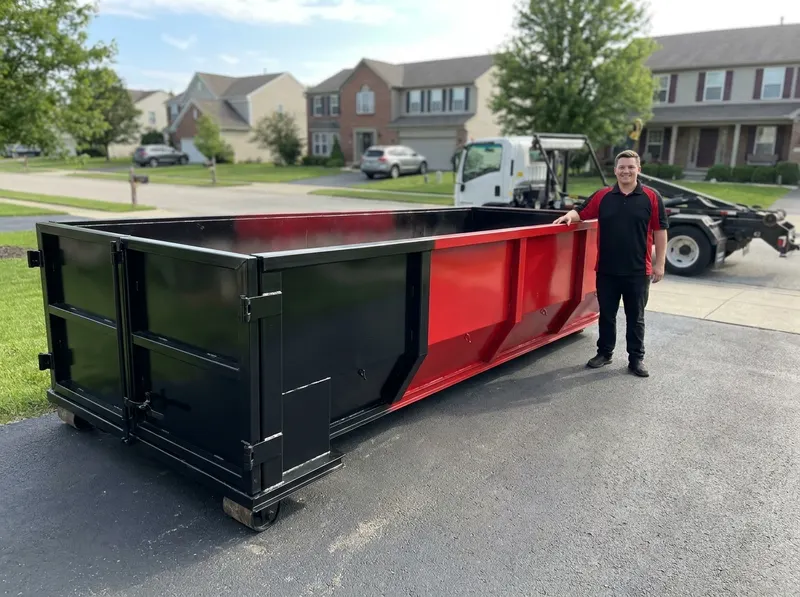
Commercial and construction dumpsters keep active building sites, tenant-turnover projects, and structural demolitions organized without debris choking active staging zones. For single-room commercial refits along Vine Street in Over-the-Rhine or modest interior renovations in Hyde Park, a 10-yard roll-off container provides 4 pickup-truck loads of volume without overrunning compact parking aprons. When crews take on entire multi-floor office retrofits near Clifton or full roof tear-offs across large footprints in Oakley, moving to a 30-yard or 40-yard roll-off is mandatory to absorb high-cube items like ductwork and acoustic ceiling tiles. The operational trade-off centers on spatial footprint versus collection capacity: larger roll-offs occupy roughly 22 feet of linear ground space, requiring clear approach angles that tight alleys in Mount Adams cannot always accommodate.
Active jobsites in Mount Lookout, Walnut Hills, and Northside face strict municipal right-of-way regulations. Positioning an open-top container directly inside private staging lots, loading docks, or personal driveways avoids city street-obstruction permits. Where space forces placement onto a finished concrete apron or asphalt pad, standard protective wood blocking shields the surface from steel caster marks under heavy 4-to-5-ton loads. Direct regional dispatch coordinates route timing around congested arterials like Interstate 71, ensuring containers land early in the morning so tradespeople arrive to an empty bin rather than idling around mounting debris piles.
Commercial job managers eliminate unexpected project expenses by pairing known material densities to the right container size. Flat-rate billing removes the common industry practice of landing low upfront prices only to bill surprise post-haul environmental fees, municipal transfer station add-ons, or fuel surcharges weeks later. Step 1: Call dispatch at (513) 776-4501 to specify debris type and physical drop coordinates. Step 2: The truck drops the container directly on protective wood dunnage prior to crew arrival. Step 3: Crews fill the container level with the top rail to maintain legal transit height. Step 4: Dispatch collects the full roll-off on the agreed haul date, clearing your jobsite immediately.
Every job gets a firm, written price after a free on-site visit.
Tell us about your commercial & construction dumpsters job in Cincinnati and we'll send a clear, written quote, usually the same day.
 Rapid Dumpster Rental